Full face mask for pest control
Pest controllers work with many products in many places: misting in closed rooms, dusts, baits, sometimes fumigants. The right filter changes with the product, and for some products no filter is enough.
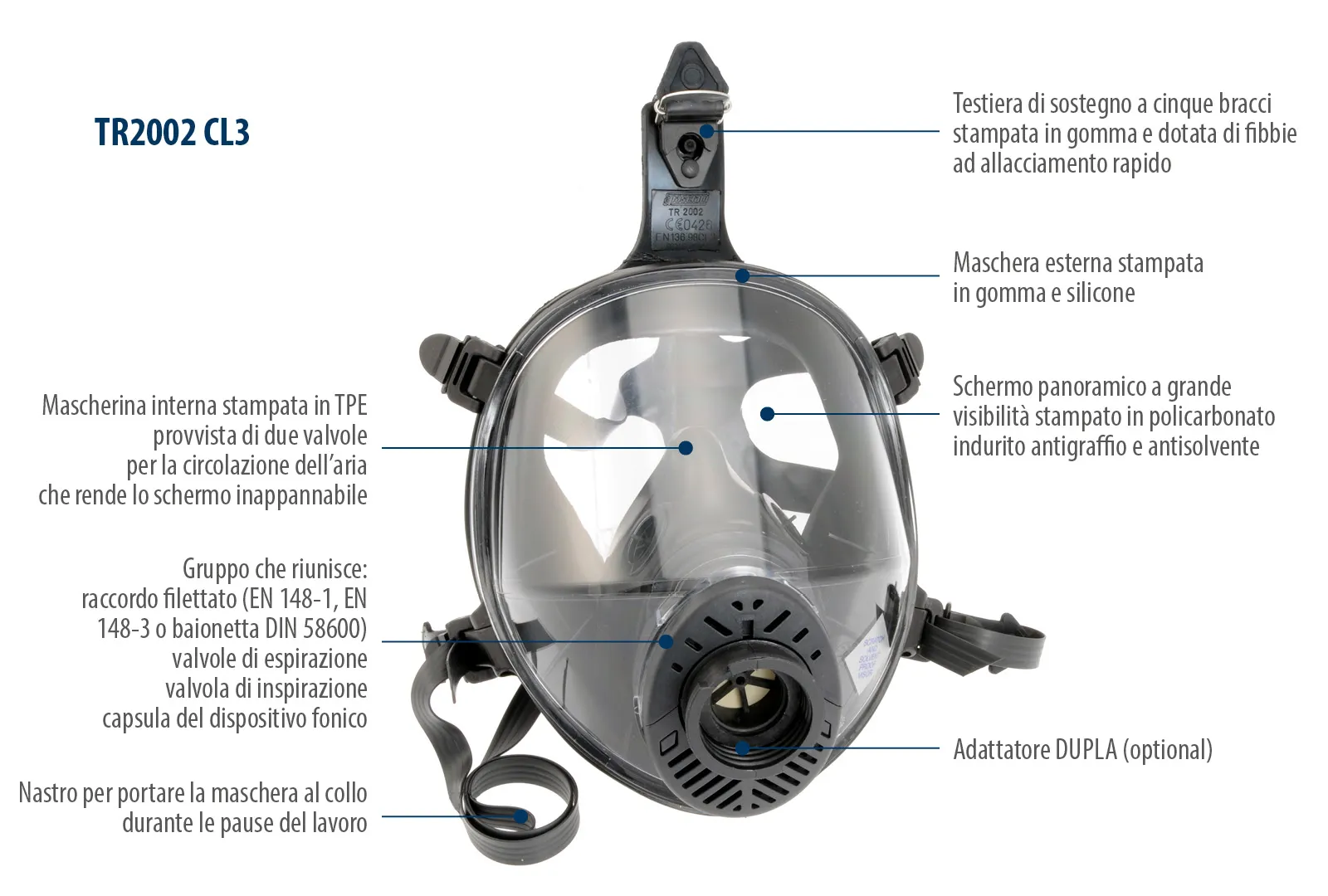
Misting and spray treatments
Misted insecticides are usually solvent-based or emulsions: organic vapours (A) and droplets (P3). In closed rooms the concentration rises fast, and a full face mask also protects the eyes.
Dusts and baits
Insecticide dusts and rodent baits are handled mainly with gloves; when blowing dust into voids and ceilings you need at least P3.
Fumigation
Fumigants (such as those releasing phosphine) are toxic gases at high concentration. Some filter makers allow B filters only within precise limits, others require self-contained breathing apparatus. Fumigation is a regulated activity, done only by licensed staff following the fumigant's safety data sheet.
The filter to start from
ABEK2 P3Spasciani 203 A2B2E2K2P3
ABEK2 P3 covers organic vapours, inorganic and acid gases, ammonia and mists: it is the most versatile filter when products change often. If the safety data sheet asks for a different filter, the data sheet wins.
The filter shown is a starting point: the substance's safety data sheet, and at work the risk assessment, have the final word.
Other jobs
Limits and warnings
- The filter does not protect where oxygen may drop below 17% or where the gas concentration is unknown and high.
- After a treatment, respect the ventilation times before letting people back in.
- A full face mask is category III PPE: training is required.